Changes in a few key genes concentrated in the same regions of the genome have helped three different species of sunflower to adapt to temperature, water availability and other environmental conditions.
A newly built framework could help researchers assess the impact of genetic variants associated with developmental and epileptic encephalopathy type 44.
Inhibiting an ion channel called ryanodine receptor 2 reduces abnormal calcium leaks in the hearts of guinea pigs and prevents fatal arrhythmias and sudden cardiac death.
An artificial intelligence network trained on a dataset of annotated non-human ape pictures tracks their behavior better than networks trained on other species.
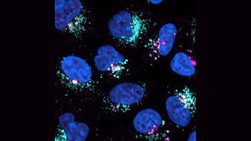
A newly discovered Rab12-dependent mechanism helps to recruit and increase the activity of an enzyme involved in Parkinson’s disease at the membrane of lysosomes.