Browse our latest Microbiology and Infectious Disease articles

Page 82 of 180
    1. Ecology
    2. Microbiology and Infectious Disease

    Relationships between community composition, productivity and invasion resistance in semi-natural bacterial microcosms

    Matt Lloyd Jones, Damian William Rivett ... Thomas Bell
    Resident members of natural bacterial communities limit the growth of non-resident bacteria primarily by increasing overall community growth.
    1. Evolutionary Biology
    2. Microbiology and Infectious Disease

    RNA Viruses: What leads to parallel evolution?

    Debapriyo Chakraborty
    The repeated emergence of similar variants of influenza virus is linked to interactions between the virus’s RNA segments.
    Version of Record
    Insight
    1. Microbiology and Infectious Disease
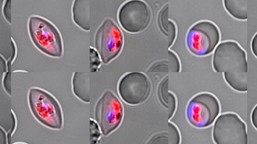
    Mosquito infection by gametocytes from cultures exposed to dihydroartemisinin (DHA) from Figure 2, Portugaliza et al.

    Malaria: A Collection of Articles

    Edited by Olivier Silvie et al.
    eLife has recently published a wide range of papers on malaria, covering a diversity of themes including parasite biology, epidemiology, immunology, drugs and vaccines.
    1. Microbiology and Infectious Disease
    2. Physics of Living Systems

    Gut bacterial aggregates as living gels

    Brandon H Schlomann, Raghuveer Parthasarathy
    A theory of gut bacterial aggregation produces a cluster size distribution that matches that of several strains observed in zebrafish, suggesting principles generally applicable to the vertebrate gut.
    1. Microbiology and Infectious Disease

    Monocyte-derived transcriptome signature indicates antibody-dependent cellular phagocytosis as a potential mechanism of vaccine-induced protection against HIV-1

    Shida Shangguan, Philip K Ehrenberg ... Rasmi Thomas
    Using single-cell CITE-seq to implicate monocytes as the cellular origin of a protective HIV vaccine gene signature.
    1. Computational and Systems Biology
    2. Microbiology and Infectious Disease

    Linking functional and molecular mechanisms of host resilience to malaria infection

    Tsukushi Kamiya, Nicole M Davis ... Nicole Mideo
    With a data-driven mathematical modelling approach, within-host ecological information alone can provide clues on the mechanistic basis of diverse malaria infection outcomes.
    1. Epidemiology and Global Health
    2. Microbiology and Infectious Disease

    SARS-CoV-2 shedding dynamics across the respiratory tract, sex, and disease severity for adult and pediatric COVID-19

    Paul Z Chen, Niklas Bobrovitz ... Frank X Gu
    COVID-19 severity, rather than sex or age, predicts SARS-CoV-2 kinetics, and SARS-CoV-2 viral load from lower respiratory tract specimens may predict severe disease days before clinical deterioration for COVID-19 patients.
    1. Microbiology and Infectious Disease

    mRNA vaccination in people over 80 years of age induces strong humoral immune responses against SARS-CoV-2 with cross neutralization of P.1 Brazilian variant

    Helen Parry, Gokhan Tut ... Paul Moss
    The BNT162b2 mRNA COVID-19 vaccine is highly effective at generating immune responses in people over the age of 80 years and provides good cross neutralization of the P.1 gamma variant of concern.
    1. Evolutionary Biology
    2. Microbiology and Infectious Disease

    Common host variation drives malaria parasite fitness in healthy human red cells

    Emily R Ebel, Frans A Kuypers ... Elizabeth S Egan
    Human red blood cells from healthy donors display marked biophysical and genetic variation that impacts the growth of Plasmodium falciparum malaria parasites, outside of known disease alleles.
    1. Microbiology and Infectious Disease
    2. Physics of Living Systems

    Inhibition of SARS-CoV-2 polymerase by nucleotide analogs from a single-molecule perspective

    Mona Seifert, Subhas C Bera ... David Dulin
    High-throughput and ultra-stable magnetic tweezers reveal that Remdesivir induces a long-lived backtrack pause upon incorporation by the coronavirus polymerase, and SARS-CoV-2 is able to evade interferon-induced antiviral ddhCTP.